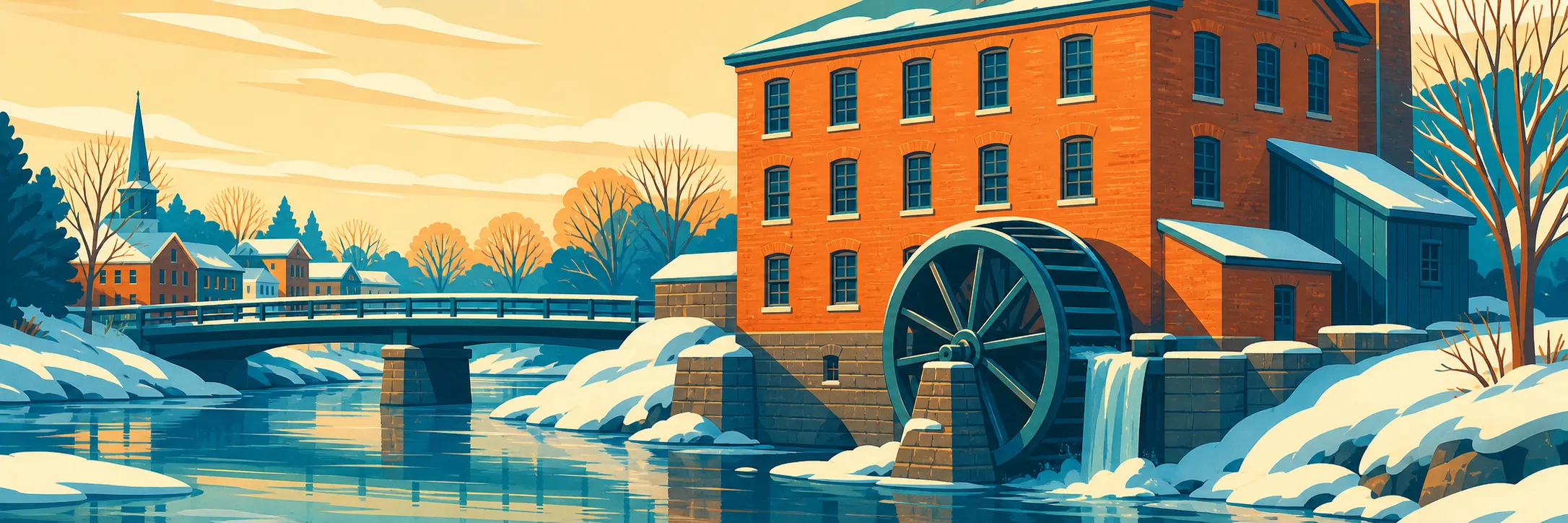
The rain is easing off into April, which up here means it mostly comes in the afternoons now. I have been thinking about what a town keeps after the work that made it is gone. In Gault Mills the mill closed a long time ago, and it is still the biggest building anywhere in sight.
The mill goes last
A mill town does not empty all at once. First the shifts get shorter. Then the counters at the company store change over, a little less stock and a little more credit, until the store turns into something else or into nothing. Then the young people leave, because there is not much reason left to stay. The mill is the last to go, and most of the time it does not really go at all. It stops running, and it stays standing.
What stays
What stays is everything the mill built and everything it taught. The houses are still there, put up in rows on the cheap, most of them still lived in. There are tools in every garage, because mill work left people with trades, and a person with a trade buys good tools and keeps them sharp. There are men and women in that town who can fix nearly anything, because that is what a mill puts into people, and it stays when the mill stops.
And there is the whistle, or the memory of one. There has been nothing to blow it in a long time, but the town still runs on the old schedule. People break for lunch at the hour it used to sound. They wake at that hour too, most of them, without setting an alarm. A signal can stop and still run a town's day, and that is the sort of thing I would not have known to invent.
Where the stories come from
I did not interview anyone for this. I did not need to. I grew up on the Oregon coast, one town over from places that were doing exactly this, and I remember it without needing notes. When I build Gault Mills, I am mostly just remembering, and then changing the names so no one gets hurt.
That habit of keeping things is why I set my mysteries here. A town that repairs its own machines keeps its own records. People write down what broke and what they did about it, because a note is how a thing gets fixed right the next time it fails. A written record is also where my kind of story begins. Somebody keeps a record that does not match the account the town agreed to give, and that is just the sort of trouble I am looking for.